
Technology
How to Find Recently Deleted Files on Mac?


I accidentally deleted important files from my Mac. Is there any way to find those recently deleted files on Mac before they are permanently lost?
Data loss on Mac – whether due to accidental or intentional deletion – can feel like a disaster, especially if the deleted file contains something important or memorable. If you ever encounter data loss issues on your Mac, don’t lose hope. The good news is that there are several free Mac data recovery software and manual workarounds available that you can try to restore your lost files quickly and easily.
Whether you’re using a MacBook Air, MacBook Pro, or iMac running macOS Ventura, Sonoma, or an earlier version, the methods in this guide can help you find recently deleted files on Mac easily. Below, we’ll explain each recovery method in clear, step-by-step instructions so you can restore your files quickly and confidently
Common Reasons for File Loss on Mac
Understanding the exact reason for your data loss on Mac can help you identify adequate recovery workarounds. Here are some main reasons why data usually gets deleted on Mac:
- Accidental Deletion: You may have accidentally deleted files from your Mac while browsing other files and folders without realising their importance.
- Emptying the Trash: When you empty the trash folder, its files are no longer easily accessible unless backed up or recoverable through specialised Mac data recovery software tools.
- macOS Update Issues: Sometimes, recent system updates or upgrades (e.g., macOS Ventura or Sonoma) result in installation errors or compatibility problems, which may cause data loss on your Mac.
- Hard Drive or SSD Failure: If your storage media is damaged, due to bad sectors or drive corruption, it can lead to permanent or temporary file loss.
- Malware or Virus Attacks: Although less common on macOS, malicious programs like viruses or malware can delete, encrypt, or corrupt files.
Where to Find Recently Deleted Files on Mac?
Before attempting any advanced recovery methods, first verify whether the file is truly deleted. Perform the basic checks below on your Mac to confirm if the file is actually missing.
01: Check Trash Folder on Mac
Every deleted file on your Mac goes to the Trash or Bin and remains there until permanently erased. It is good practice to check this folder before applying any other method. To recover recently deleted files from Trash:
- Firstly, click the Trash icon from the Dock.
- Browse through deleted files and select the one you want to restore.
- Right-click the file and select Put Back.
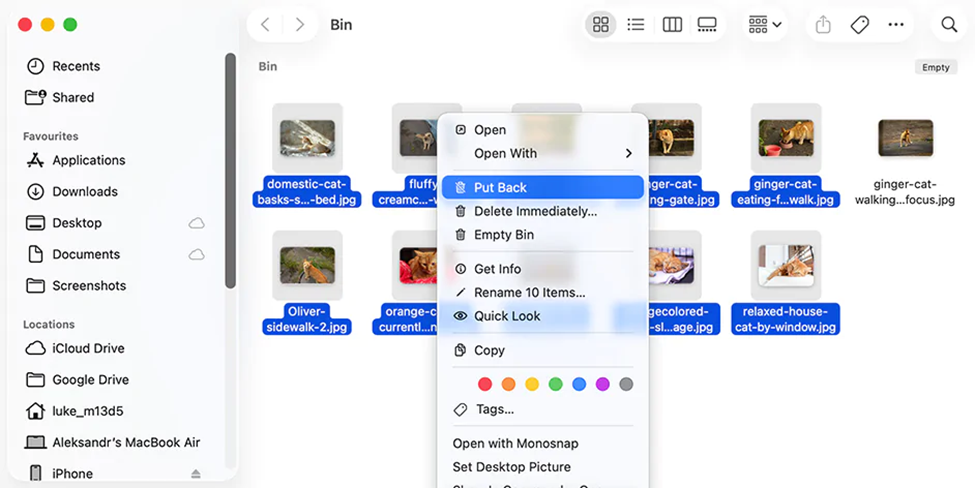
This will return the selected files to their original location.
02: Use Spotlight Search
Sometimes the file is actually not deleted – it is just misplaced on your Mac. To find the deleted file using Spotlight:
- Press Command (⌘) + Space
- Type the file name you are looking for.
- If the file appears in the search result, right-click on it and select Show in Finder.
This is especially helpful when files are accidentally dragged into another folder.
What to Do If Deleted Files Are Not in the Trash?
Instances may happen when your Trash folder is emptied, or the required file is not present there. In such cases, you can use previously created backups or third-party Mac data recovery software to restore your deleted files. Let’s explore these options in detail:
Method 01: Use Time Machine Backup
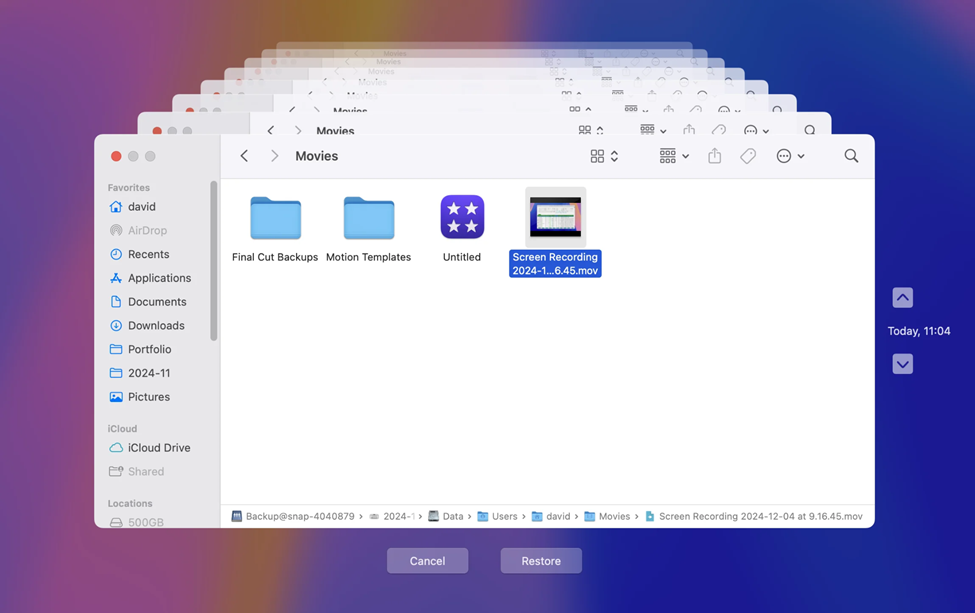
Mac provides an in-built Time Machine backup that automatically backs up your Mac regularly (if enabled). If you’ve enabled the Time Machine backup utility on your Mac, data recovery becomes very easy. Follow the below steps to recover recently deleted files on Mac using Time Machine:
- Open the folder where the deleted files were originally stored.
- Click the Time Machine icon from the menu bar.
- Now, choose Enter Time Machine from the dropdown menu.
- Browse through different backups and select the one you want to restore.
- Click Restore to save selected files to their original location.
Method 02: Recover Files Using iCloud
Along with the macOS built-in Time Machine backup utility, you can use iCloud to recover recently deleted files directly from your iCloud account. Apple typically keeps deleted files for up to 30 days, giving you a recovery window before permanent removal. To restore deleted files from iCloud:
- Open a web-browser and go to iCloud.com in your browser.
- Log in using your Apple ID credentials.
- Go to iCloud Drive, then click Recently Deleted (from the bottom-right corner or sidebar).
- Browse or search for your deleted file that you need to restore.
- Select the file you want and click Recover.
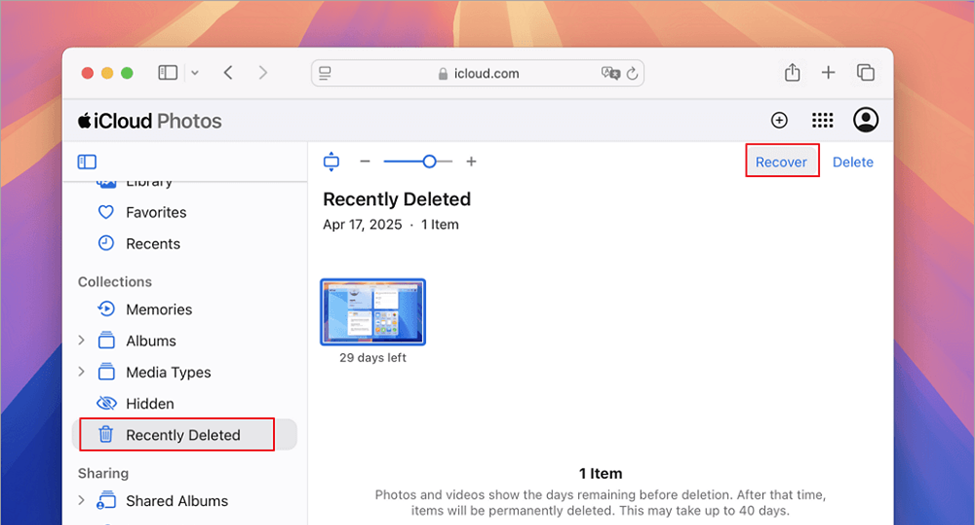
The file will be restored to its original folder location in iCloud Drive and will sync back to your Mac automatically.
Method 03: Use Free Mac Data Recovery Software
Ever wondered what if you don’t have a backup of recently deleted files? In such a case, you can use third-party free Mac data recovery software such as Stellar Data Recovery Free for Mac to restore your deleted files. This all-in-one data recovery software can help you restore files deleted due to accidental deletion, formatting, system error, and many other reasons. The software supports recovery of deleted photos, videos, documents, emails, chats, and other types of files.
When you find a file deleted from your Mac, you can use the Stellar Data Recovery Free for Mac software to get it back in a few simple clicks. This software thoroughly scans your storage device to locate deleted files and then enables you to restore them to your Mac. The free edition supports recovery of deleted data up to 1 GB of file size. However, to recover files of larger size, you can use the premium versions.
Here’s how to recover recently deleted files using this Mac data recovery software:
Step 1: Download and install the Stellar Data Recovery Free software from its official website on your Mac.
Step 2: Launch the software and from the homepage, select the type of file you need to restore and click Next.
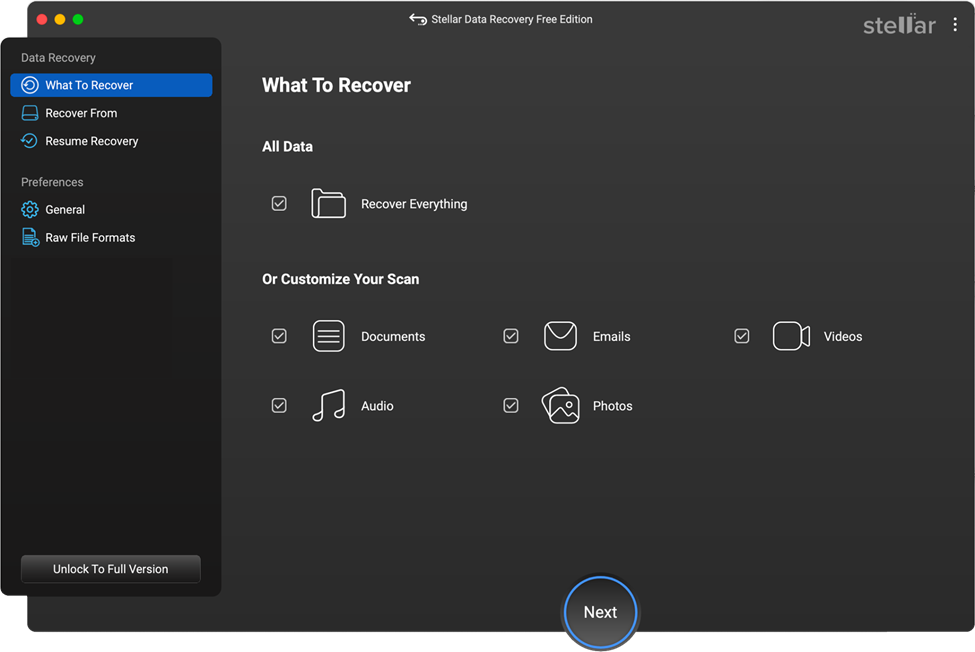
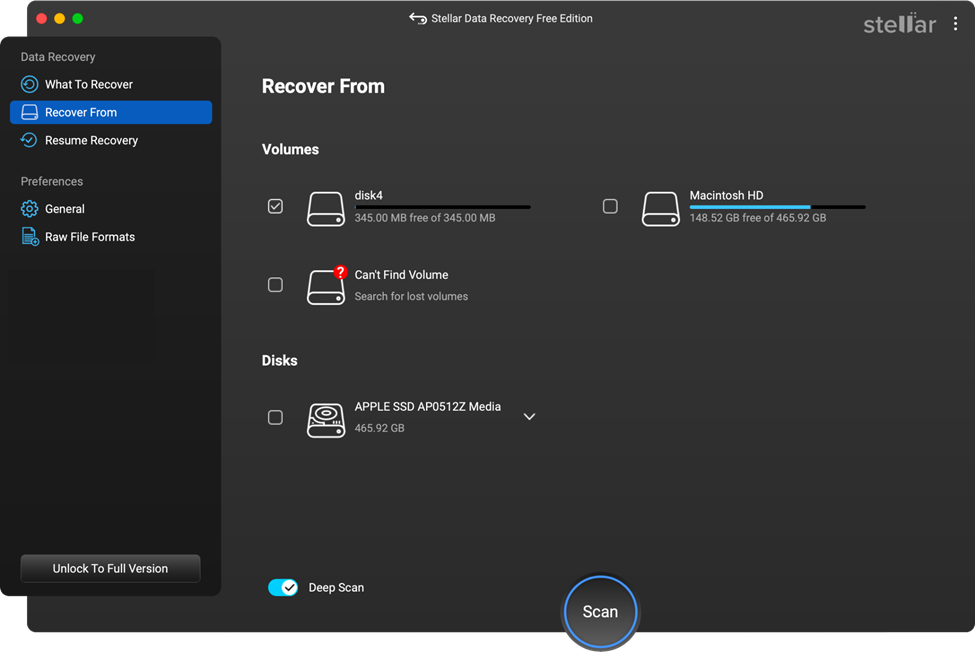
Step 3: Next, select the drive or location where the files were stored before deletion. Click Scan to initiate the scanning process.
Note: For deeper recovery, you can enable Deep Scan if the quick scan doesn’t locate your files.
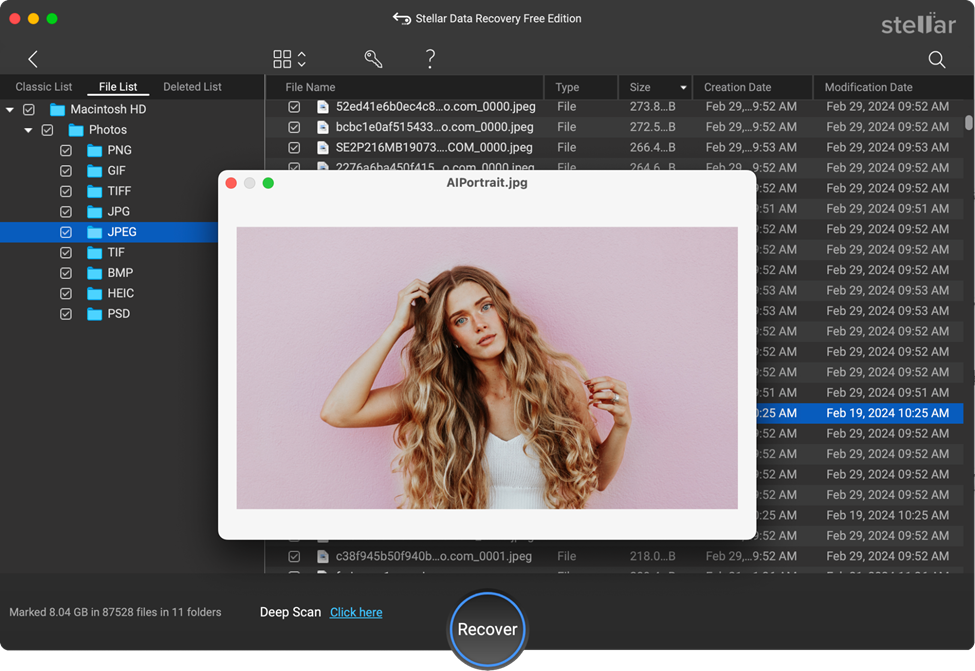
Step 4: Once the scanning completes, preview the recoverable files and select the one you want to restore. Click Recover to save selected files to a safe location on your Mac.
Wrapping Up
Data loss on a Mac can be distressing, especially if you have something important or precious. If you ever experience unexpected file deletion, go with the above methods one by one to find recently deleted files on Mac. Start with basic workarounds such as checking the Trash folder, using Spotlight, or previously created backups. If these DIY methods fail, you can use third-party free Mac data recovery software such as Stellar Data Recovery Free For Mac to get your files back. The key fact is that the faster you act, the better your chances of successful data recovery.
And most importantly—set up automatic backups today. A few minutes of preparation can save hours (or days) of frustration later.

Geek culture is no longer a quiet corner of the internet. It is bold, creative, and proudly mainstream. That is where geekzilla tio geek enters the picture. This phrase represents more than a trend. It captures a lifestyle shaped by technology, gaming, pop culture, and online identity. Whether you love comics, coding, or cinematic universes, you have likely felt this shift. Digital spaces now celebrate passion instead of hiding it.
The Evolution of Geekzilla Tio Geek
Geek culture used to live in basements and small hobby groups. People who loved comic books or video games often felt misunderstood. Over time, technology connected fans worldwide. Online forums, streaming platforms, and social media gave enthusiasts a louder voice. What was once niche became a visible, thriving community.
Geekzilla tio geek reflects this transformation. It signals confidence and pride in interests once considered unusual. Instead of hiding their hobbies, people now build careers around them. Content creators, game developers, and tech reviewers show how passion can shape opportunity. This cultural shift matters because it normalizes curiosity and creative thinking.
The rise of digital fandom also changed how communities interact. Instead of meeting only at conventions, fans connect daily online. They share fan art, discuss new releases, and debate storylines in real time. This constant engagement keeps culture alive and evolving. It turns passive consumers into active participants.
Will You Check This Article: Fred di Blasio: Leadership and Legacy Explored
How Digital Communities Redefined Identity
Online spaces allow people to explore who they are without judgment. Forums and social platforms create room for self-expression. Someone who loves coding, anime, or retro games can find others who share that passion. This sense of belonging builds confidence and encourages growth.
Digital identity plays a major role in this transformation. Avatars, usernames, and profiles become extensions of personality. People curate their interests and connect through shared hobbies. The internet removes geographic limits. A teenager in one country can collaborate with a designer across the globe.
This shift matters because identity is deeply tied to community. When individuals feel accepted, they contribute more freely. They create podcasts, design mods, or build fan theories. These activities strengthen bonds and inspire innovation. In many ways, digital communities have become modern social hubs.
Technology as the Backbone of Modern Geek Culture
Technology is the engine that powers everything. High-speed internet, affordable devices, and powerful software make creativity accessible. Streaming platforms allow gamers to broadcast live. Developers release indie projects directly to global audiences. The barrier to entry has never been lower.
Cloud computing and social networks amplify reach. A single viral post can connect millions of fans overnight. This speed changes how trends form. Conversations that once took months now evolve within hours. Innovation spreads quickly, shaping tastes and preferences in real time.
This technological backbone also encourages experimentation. People test ideas, gather feedback, and improve quickly. The culture thrives on iteration and collaboration. It rewards curiosity and technical skill. That is why technology remains central to every aspect of modern fandom.
Geekzilla Tio Geek and Pop Culture Influence
Pop culture has embraced what was once underground. Superhero films dominate the box office. Fantasy series break streaming records. Video game adaptations attract mainstream audiences. Geekzilla tio geek symbolizes this crossover between niche interests and global entertainment.
This influence goes beyond movies. Merchandise, collectibles, and cosplay have become profitable industries. Conventions attract thousands of attendees each year. Brands now collaborate with artists and influencers from gaming and comic communities. Passion has become a powerful economic driver.
The cultural impact also shapes storytelling. Diverse voices gain visibility through online platforms. Independent creators build loyal followings without traditional gatekeepers. This democratization of media matters because it allows fresh perspectives to thrive. It keeps storytelling dynamic and inclusive.
The Psychology Behind Passionate Fandom
Why do people invest so deeply in fictional worlds and digital hobbies? The answer lies in connection and meaning. Stories offer escape, but they also reflect real struggles. Fans see parts of themselves in characters and narratives. This emotional bond strengthens loyalty.
Community amplifies that bond. Shared experiences create lasting memories. Watching a live stream or debating a season finale together builds social ties. These interactions satisfy a basic human need for belonging. They transform entertainment into shared identity.
Passionate fandom also encourages skill development. Fans learn graphic design, editing, or coding to support their interests. Creative output grows from admiration. This process builds confidence and practical knowledge. It turns hobbies into platforms for personal growth.
Content Creation in the Age of Geek Media
The internet transformed fans into creators. Platforms like YouTube and Twitch allow enthusiasts to share reviews, tutorials, and commentary. Podcasts explore deep lore and technical analysis. Blogs break down story arcs and game mechanics. The line between consumer and producer has blurred.
Monetization opportunities make this shift sustainable. Advertising, sponsorships, and crowdfunding support independent voices. A passionate gamer can build a career from live streaming. A tech enthusiast can grow an audience through thoughtful reviews. Creativity now has tangible value.
This environment encourages authenticity. Audiences prefer relatable creators over polished corporate messaging. They trust personal experience and honest opinions. That trust builds strong communities. It also reinforces the idea that passion, when shared openly, can create real impact.
Challenges Within Modern Geek Communities
Despite growth, challenges remain. Online spaces sometimes foster negativity and gatekeeping. Some fans question others’ authenticity or knowledge. This behavior can discourage newcomers. Healthy communities require respect and open-mindedness.
Digital overload also affects engagement. With endless content available, attention becomes fragmented. Trends move quickly, leaving little time for reflection. Creators face pressure to produce constantly. This pace can lead to burnout and creative fatigue.
Balancing inclusivity with quality discussion is essential. Communities thrive when they welcome diverse perspectives. Moderation and thoughtful dialogue keep spaces constructive. Addressing these challenges ensures long-term sustainability and positive interaction.
Conclusion: The Lasting Impact of Geekzilla Tio Geek
Geekzilla tio geek represents more than a catchy phrase. It reflects a cultural movement driven by technology, creativity, and shared passion. What once felt isolated now connects millions worldwide. Digital spaces empower fans to express identity and build meaningful relationships.
This evolution matters because it proves that curiosity deserves celebration. Whether through gaming, coding, or storytelling, enthusiasm fuels innovation. Communities built around shared interests inspire collaboration and growth. They show how culture adapts alongside technology.
As digital landscapes continue to expand, geekzilla tio geek will likely evolve with them. New platforms and tools will reshape interaction again. Yet the core remains constant. Passion brings people together, and connection transforms hobbies into vibrant communities that shape the modern world.
Read More: Legendbio.co.uk

Choosing between daily and monthly contact lenses is one of the most common questions for lens wearers. Both options are safe, comfortable, and widely used. However, the right choice depends on your lifestyle, eye sensitivity, and budget. Understanding the difference can help you protect your eye health while enjoying clear vision every day.
In this guide, we will explain how both types work, their benefits, and which one may suit you better.
What Are Daily Contact Lenses
Daily lenses are single-use lenses. You wear a fresh pair in the morning and throw them away at night. There is no need for cleaning or storing them. Because of this, many people find them simple and stress-free.
You can browse different types of daily contact lenses designed for various prescriptions and eye needs.
Daily lenses are thin, lightweight, and made to provide comfort for a full day. Since you use a new pair every day, there is less risk of dirt, protein buildup, or bacteria collecting on the lens surface.
One of the biggest advantages of daily lenses is hygiene. A fresh lens every morning means fewer chances of infection caused by improper cleaning. They are often recommended for people with sensitive eyes or allergies because they reduce irritation.
Daily lenses are also ideal for people who wear contact lenses occasionally. If you only wear lenses for work, sports, or events, you only use what you need. There is no worry about monthly replacement schedules.
However, daily lenses can be more expensive if you wear them every single day. Over time, the cost may be higher compared to reusable options.
What Are Monthly Contact Lenses
Monthly lenses are reusable lenses that can be worn for up to 30 days. You remove them each night, clean them with solution, and store them in a case. After one month, you replace them with a new pair.
You can explore various monthly contact lenses suitable for everyday wear and different prescriptions.
Monthly lenses are slightly thicker than daily lenses, which makes them more durable. They are designed to handle daily cleaning and regular use. Because you replace them once a month instead of every day, they are usually more affordable for full-time wearers.
Many people who wear lenses every day prefer monthly lenses because they offer good value. They are also available in a wider range of prescriptions, including options for astigmatism and multifocal needs.
The main responsibility with monthly lenses is hygiene. Proper cleaning is essential. If lenses are not cleaned correctly, bacteria can build up and cause irritation or infection. This means you must follow a strict routine and never skip cleaning.
Comparing Comfort and Eye Health
When it comes to comfort, both daily and monthly lenses can feel great if they are properly fitted. Daily lenses often feel fresher because they are new every day. There is no chance for deposits to build up over time.
Monthly lenses can also be very comfortable, especially if you maintain them properly. Modern lens materials allow high oxygen flow to the eyes, which helps keep them healthy.
From a hygiene perspective, daily lenses have a slight advantage. Since they are disposable, there is minimal risk from storage cases or cleaning errors. Monthly lenses are safe too, but they require more care and discipline.
Cost Difference Between Daily and Monthly Lenses
Cost is an important factor for many people. If you wear lenses occasionally, daily lenses may actually save you money because you only pay for the days you use them.
If you wear lenses every day, monthly lenses are usually more cost-effective. Even after adding the cost of cleaning solution, they often work out cheaper per day.
It is important to consider not only the price but also your lifestyle. Convenience, hygiene, and comfort should also influence your decision.
Which Option Is Better for You
Daily lenses may be better if you have sensitive eyes, allergies, or a busy lifestyle. They are convenient, hygienic, and easy to manage. There is no cleaning routine, which reduces the chance of mistakes.
Monthly lenses may be better if you are a regular lens wearer and want a more budget-friendly option. They are durable and suitable for people who are comfortable following a daily cleaning routine.
There is no single answer that fits everyone. The best contact lenses are the ones that match your personal needs and keep your eyes healthy.
Final Thoughts
Both daily and monthly contact lenses are safe and effective when used correctly. Daily lenses offer maximum hygiene and convenience, while monthly lenses provide better long-term value for regular users.
Before choosing, consider how often you wear lenses, how disciplined you are with cleaning, and whether you have sensitive eyes. If you are unsure, it is always best to consult your eye care professional for advice tailored to your vision needs.
Your eyes are delicate, so making the right choice today will help protect your vision in the long run.

If you have ever argued with a friend about who knows more about Pokémon, you have probably wished for a fair way to prove it. That is where pkmnquiz comes in. It turns years of watching episodes, playing games, and collecting cards into a fun, structured challenge. Instead of random guessing, you test real knowledge about characters, regions, types, and abilities. Whether you are a casual fan or a serious trainer, this experience feels surprisingly addictive and rewarding.
Why pkmnquiz Is More Than Just a Trivia Game
At first glance, it might seem like a simple trivia platform. You answer questions, get a score, and move on. But once you dive deeper, you realize it taps into nostalgia, memory, and friendly competition. It pulls details from across the Pokémon universe, including different generations, evolutions, and battle mechanics.
What makes it stand out is how it challenges both surface knowledge and deeper understanding. You may remember Pikachu easily, but can you recall specific moves or regional forms? That balance keeps the experience engaging. It rewards long time fans while still welcoming newcomers who want to test what they know.
It also sparks curiosity. After getting a question wrong, most players feel the urge to look up the correct answer. That simple action turns a quiz into a learning loop. Over time, you build sharper recall about Pokémon types, abilities, and story arcs without feeling like you are studying.
Will You Check This Article: MyGeneseo Guide for Students and Campus Life
How pkmnquiz Strengthens Your Pokémon Knowledge
Memory works best when you actively retrieve information. When you use pkmnquiz, you force your brain to search for answers instead of passively reading them. That retrieval practice strengthens long term retention. You remember regions, evolutions, and move sets more clearly.
I have noticed that after a few rounds, details start connecting naturally. For example, thinking about Fire types leads to remembering their weaknesses. Linking one concept to another builds a mental map of the Pokémon world. This makes conversations with other fans more confident and enjoyable.
It also highlights knowledge gaps. Maybe you know the first three generations well but struggle with newer additions. Recognizing those gaps helps you focus your attention. Instead of randomly browsing, you can revisit specific games or episodes with a clearer purpose.
Different Types of Questions You Can Expect
The variety keeps things fresh. Some questions test identification, asking you to name a character based on traits or appearance. Others focus on mechanics such as abilities, evolutions, or battle strategies. That mix ensures you cannot rely on just one strength.
There are also region based questions. You might need to recall which Pokémon belongs to a certain area or which Gym Leader uses a specific type. These details deepen your understanding of the broader Pokémon universe and make each region feel distinct.
Occasionally, questions dive into competitive aspects like strengths and weaknesses. Understanding how different types interact can give you an edge not just in the quiz but also in actual gameplay. This crossover between trivia and strategy adds meaningful value.
The Role of pkmnquiz in Competitive Fandom
Fandom thrives on friendly rivalry. Whether you are debating with friends or participating in online communities, proving your knowledge feels satisfying. pkmnquiz offers a structured way to settle those debates without arguments turning personal.
It also builds credibility. When you consistently score high, people recognize your expertise. That recognition encourages deeper conversations about battle tactics, rare evolutions, or underrated characters. It transforms casual chats into informed discussions.
More importantly, it brings fans together. Sharing scores, challenging each other, and comparing results create a sense of community. Instead of competing harshly, most players use it as a bonding experience built around shared passion.
How to Improve Your Scores Naturally
Improving is not about memorizing random facts. It starts with understanding patterns. Pokémon types follow logical strengths and weaknesses. If you grasp those core mechanics, many answers become easier to deduce rather than recall blindly.
Another useful approach is revisiting different generations. Watching episodes or replaying older games refreshes forgotten details. Even browsing character summaries can trigger memories. The key is active engagement instead of passive scrolling.
Finally, reflect on mistakes. When you miss a question, pause and understand why. Was it confusion between evolutions or mixing up regions? Identifying the reason helps prevent repeating the same error. Over time, your accuracy improves steadily.
Why Nostalgia Makes It So Addictive
Pokémon is deeply tied to childhood for many people. Hearing a familiar name or seeing a classic character brings back memories of early mornings and trading cards. That emotional connection makes each question feel personal.
When you answer correctly, it feels like reconnecting with a younger version of yourself. There is pride in remembering details from years ago. That emotional reward keeps players coming back again and again.
Even newer fans experience a similar thrill. Discovering older characters through quizzes creates curiosity about past storylines. Nostalgia blends with discovery, making the entire journey richer and more engaging.
Using pkmnquiz as a Learning Tool
While it feels like entertainment, it also works as a subtle educational tool. You practice memory, pattern recognition, and logical thinking. Those skills extend beyond Pokémon and into everyday learning situations.
Parents and teachers sometimes underestimate the power of themed quizzes. When learners engage with something they love, their focus improves naturally. A Pokémon based challenge can make critical thinking practice feel effortless.
It can also encourage research habits. After encountering unfamiliar characters or regions, players often look up more information. That habit of exploring answers independently strengthens curiosity and self directed learning.
Conclusion: Is pkmnquiz Worth Your Time?
If you love Pokémon and enjoy testing your knowledge, pkmnquiz is absolutely worth exploring. It blends nostalgia, competition, and learning into one seamless experience. Instead of passively consuming content, you actively engage with the universe you enjoy. Over time, you sharpen memory, deepen understanding, and connect more confidently with other fans. For anyone who calls themselves a trainer at heart, it is more than a quiz. It is a fun way to grow your mastery of the Pokémon world.
Read More: Pointmagazine.co.uk
-

 Business2 months ago
Voozon.com Explained: Meaning, Features, and Online Use
-
 Uncategorized2 months ago
Sosoactive: The Complete 2025 Guide to Features, Benefits, and Digital Growth
-
 Celebrity2 months ago
The Unseen Influence of Strategist Claire Froggatt
-
 Celebrity2 months ago
Valeria Wasserman: Life, Legacy, and Influence of a Remarkable Woman
-
 Celebrity2 months ago
Sergio Novak – Biography of the Man Behind the Spotlight
-
 Celebrity2 months ago
Joan Anderton: The Full Biography of a Tech Visionary
-
 Crypto2 months ago
Milohacherry Coin: The Complete Guide to One of the Most Talked-About Crypto Projects Today
-
 Celebrity2 months ago
Sened Teame — Background, Career, Life Story & Growing Public Interest