
finance
Smart Upskilling: How to Secure High-Paying Medical Certifications on a Budget


Career advancement regulations are being revised. Employers are moving away from degree requirements and toward verifiable, validated abilities in almost every industry. This change is generating a unique opportunity in the healthcare industry, which is one of the most stable and rapidly expanding areas of the economy. Employees who make Smart strategic investments in the appropriate credentials now are setting themselves up for future decades of increased pay, job security, and retirement contributions. The challenge now is how to upskill without incurring needless financial risk rather than whether to upskill.
The Skills-First Hiring Revolution of 2026
As of early 2026, over 60% of American companies have formally implemented skills-based recruiting frameworks, up from about 45% just two years prior, according to workforce analysts. Practically speaking, this means that when applying for specialized technical positions, a board certification can be just as important as a four-year degree, if not more so. Leading this change is the medical technology industry. Hospitals and outpatient clinics continue to struggle with a lack of skilled laboratory, radiology, and ophthalmology workers as diagnostic equipment advances and patient numbers rise.
These aren’t entry-level positions. Certified Ophthalmic Technicians (COTs), radiologic technologists, and surgical techs routinely command salaries between $52,000 and $78,000 per year — compensation that, when paired with disciplined savings habits, can meaningfully accelerate retirement timelines. Yet many workers still assume the path to these roles requires a multi-year, expensive academic program. That assumption is outdated.
Why Certification Beats the Traditional Degree Path — Financially
A traditional allied health degree can run anywhere from $30,000 to $80,000 over two to four years, not counting lost wages during full-time study. A targeted certification pathway, by contrast, can often be completed in 12 to 18 months, primarily through self-directed learning, and at a fraction of the cost. The JCAHPO Certified Ophthalmic Technician credential — one of the most respected designations in the field — is a prime example. Candidates are evaluated through a structured examination, and preparation is entirely self-paced.
For those unfamiliar with the credential’s requirements, the official JCAHPO COT certification page outlines all eligibility criteria, examination domains, and continuing education requirements in detail. Understanding the full scope of what you’re working toward is the first step in building a cost-effective study plan.
Protecting Your Education Fund While Accelerating Your Career
Financial planning isn’t just about managing what you have; it’s about optimizing your ability to earn more. As the medical field becomes more tech-driven, the demand for certified technicians has surged, making these roles some of the most recession-proof in the 2026 job market. For professionals balancing a full-time job with their studies, efficiency is key to saving both time and money. Rather than investing in overpriced prep seminars, many are opting for targeted, high-fidelity simulations. Incorporating a realistic COT practice test into your routine provides a low-cost, high-impact way to master the 19 critical content areas required for certification, protecting your education fund while accelerating your career path.
The Bigger Financial Picture
Every dollar you don’t spend on unnecessary prep materials is a dollar that can go toward an IRA, a 401(k) match, or an emergency fund. That’s not a minor distinction. Workers who enter higher-earning certified roles even two or three years earlier than they otherwise would have can accumulate tens of thousands of additional dollars in retirement savings over a full career — thanks to the power of compound interest.
Upskilling, done strategically, is one of the highest-return investments available to working professionals. The key is choosing the right credential, preparing efficiently, and keeping costs under control so that the financial benefits of certification actually flow into your long-term wealth — not back into an industry built on overcharging people for information they could access for far less.
In 2026, the most financially intelligent career move isn’t always a graduate degree. Sometimes it’s a single, well-chosen certification — earned efficiently, affordably, and with a clear eye on the retirement timeline it makes possible.
Introduction
Understanding how a company’s stock performs is one of the smartest ways to judge its financial strength, market confidence, and growth potential. Investors across the world closely monitor stock movements to identify opportunities, manage risks, and plan for the future. Among the many companies attracting attention, Clarivate has become a name of growing interest for both retail and professional investors.
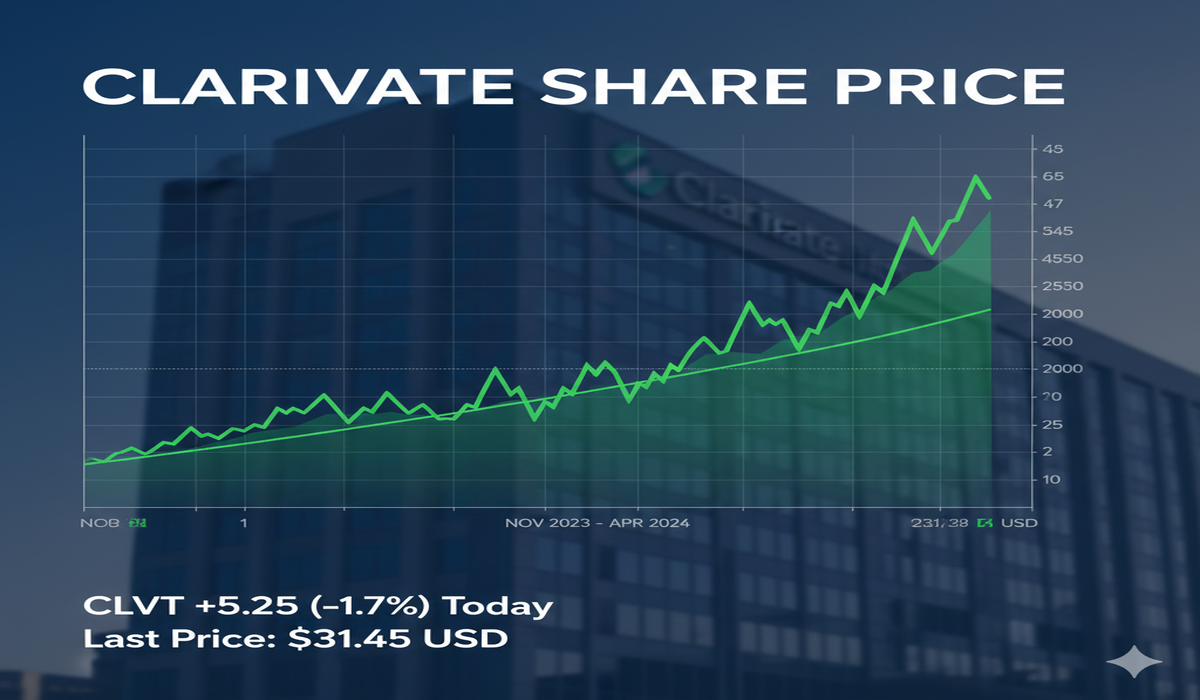
The clarivate share price reflects more than just daily market sentiment—it tells a deeper story about innovation, research intelligence, acquisitions, debt management, and long-term strategy. In this comprehensive guide, we break down everything you need to know: what Clarivate does, how its stock has performed, what influences its price, expert forecasts, risks, and whether it has long-term investment potential.
Read More: Uk Braced for significant snowstorm bringing potential white christmas
What Is Clarivate and Why Does It Matter to Investors?
Clarivate is a global leader in providing data, analytics, and insights to academic institutions, governments, pharmaceutical companies, and intellectual property professionals. Its tools help organizations make confident decisions in research, innovation, and business strategy.
Key Services Offered by Clarivate
- Intellectual Property analytics and trademark solutions
- Scientific and academic research tools
- Healthcare and life science analytics
- Market intelligence platforms
- Regulatory and compliance data services
Clarivate’s products are deeply embedded into the work of scientists, researchers, patent attorneys, and corporate strategists. This recurring-use business model makes it especially attractive for long-term investors looking for stable revenue streams.
Understanding the Clarivate Share Price – What Drives It?
The movement of the clarivate share price is influenced by a blend of financial performance, macroeconomic conditions, company strategy, and investor sentiment.
Core Factors Affecting the Stock
- Earnings Reports – Quarterly revenue, profit margins, and cash flows strongly impact investor confidence.
- Acquisitions and Mergers – Clarivate has actively grown through acquisitions, which can boost growth expectations but also increase debt.
- Debt Management – Higher interest rates affect debt-heavy companies like Clarivate more significantly.
- Market Conditions – Broader stock market sentiment heavily influences mid-cap technology stocks.
- Customer Retention and Subscriptions – Stable renewals strengthen long-term outlook.
When these variables shift, the stock price can react quickly and sometimes
Historical Performance of Clarivate Stock
Over the years, Clarivate has experienced both rapid rallies and sharp pullbacks. Like many technology and data firms, its valuation has been influenced by changing interest rates, global economic growth, and investor appetite for growth stocks.
Major Historical Trends
- Early post-listing optimism driven by high growth expectations
- Strong upward movement during periods of heavy digital transformation
- Declines during market-wide tech sell-offs
- Volatility tied to debt concerns and interest-rate hikes
The stock’s long-term chart suggests that Clarivate is a cyclical growth company rather than a defensive one—meaning it tends to move more dramatically with market changes.
Recent Clarivate Share Price Trend Explained
In recent periods, the clarivate share price has reflected multiple high-impact factors occurring at the same time:
- Rising interest rates pressuring leveraged companies
- Increased scrutiny on profitability vs. growth
- Market rotation out of tech and data stocks
- Ongoing restructuring and cost optimization programs
Despite short-term price pressure, institutional investors continue watching Clarivate closely due to its strong market position in research intelligence and IP services.
Clarivate Financial Health Overview
A solid understanding of Clarivate’s balance sheet is essential when evaluating its stock.
Revenue Stability
A large portion of Clarivate’s income comes from subscription-based services. This recurring revenue provides better predictability than transaction-based businesses.
Profitability Challenges
While revenue remains stable, profit margins have been under pressure due to:
- High interest expenses
- Integration costs from acquisitions
- Inflation-driven operating costs
Debt Position
Clarivate carries considerable debt from past acquisitions. While this helped fuel expansion, it also adds pressure during high-interest-rate environments.
Clarivate Share Price Forecast – What Do Experts Expect?
Predicting any stock price with certainty is impossible, but analysts rely on valuation models, earnings estimates, and industry trends to form educated expectations.
Short-Term Outlook
In the near term, Clarivate’s stock direction is expected to remain sensitive to:
- Quarterly earnings performance
- Interest rate decisions
- Progress in debt reduction
- Cost-cutting measures
Long-Term Growth Outlook
Over the long run, Clarivate benefits from:
- Growing global research spending
- Expanding pharmaceutical R&D
- Increased demand for data-driven decision-making
- Rising importance of intellectual property protection
If management executes its long-term strategy successfully, analysts believe the clarivate share price could recover significantly over time.
Is Clarivate a Good Long-Term Investment?
Whether Clarivate suits your investment strategy depends on your risk tolerance, time horizon, and financial goals.
Potential Advantages
- Strong market leadership in niche data services
- Sticky subscription-based revenue
- Long-term growth tied to research and IP innovation
- Ongoing operational improvements
Potential Risks
- High debt levels
- Interest rate sensitivity
- Slower-than-expected profitability growth
- Competition in analytics and data services
Clarivate is better suited for investors who are comfortable with volatility and focused on multi-year growth rather than short-term price stability.
How Clarivate Compares With Industry Peers
Clarivate operates in a competitive space alongside analytical and information service companies.
Competitive Strengths
- Highly specialized research databases
- Long-standing relationships with universities and corporations
- Deep domain expertise in intellectual property
Competitive Challenges
- Larger rivals with stronger balance sheets
- Rapid innovation required to stay relevant
- Rising customer expectations for AI-powered solutions
This competitive mix keeps pressure on management to innovate while maintaining financial discipline.
Role of Technology and AI in Clarivate’s Future
Artificial intelligence and automation are reshaping the way data platforms operate.
Clarivate has been integrating AI-driven features into its research and intellectual property tools, helping users:
- Analyze massive datasets faster
- Improve patent searches
- Accelerate drug discovery
- Enhance research impact measurement
These innovations could help drive customer retention, justify pricing power, and boost long-term earnings performance—positively influencing the clarivate share price over time.
Investor Sentiment and Market Psychology
Stock prices are not driven by numbers alone—human emotion plays a powerful role.
Bullish Sentiment Drivers
- Debt reduction announcements
- Margin improvement
- Strong earnings surprises
- Expansion into high-growth markets
Bearish Sentiment Triggers
- Weak earnings guidance
- Rising operating costs
- Delays in turnaround plans
- Broader tech market downturns
Monitoring sentiment through analyst reports, institutional holdings, and options activity can offer valuable clues about future price direction.
Dividend Policy and Shareholder Returns
At present, Clarivate does not prioritize dividend payouts. Instead, it focuses on:
- Strengthening its balance sheet
- Investing in technology
- Improving profitability metrics
This strategy appeals more to growth-oriented investors rather than those seeking immediate income.
How Economic Conditions Impact Clarivate Stock
Macroeconomic forces shape nearly every publicly traded stock.
Rising Interest Rates
Higher rates increase debt servicing costs and reduce valuation multiples, often weighing on technology stocks.
Global Research Funding
Public and private research budgets directly influence demand for Clarivate’s services.
Corporate Innovation Spending
When businesses invest in R&D, patenting, and market intelligence, Clarivate benefits.
Should You Buy, Hold, or Avoid Clarivate Now?
There is no universal answer. However, investors generally fall into three categories:
- Risk-Tolerant Growth Investors: May see current price levels as an opportunity
- Income Investors: Usually avoid Klarivate due to lack of dividends
- Short-Term Traders: Focus on earnings volatility and technical indicators
Ultimately, every decision should be based on personal financial goals and risk appetite.
Key Takeaways for Investors Following Clarivate
- Clarivate plays a critical role in global research, IP, and innovation
- Its stock is sensitive to debt levels and interest rates
- Long-term growth prospects remain intact
- Short-term volatility is likely to continue
- The clarivate share price reflects both opportunity and risk
Conclusion
The journey of Clarivate as a publicly traded company reflects the challenges and rewards of operating in a data-driven, innovation-focused economy. Its stock price has moved through cycles of optimism, caution, and recovery as markets react to financial performance, acquisitions, debt levels, and broader economic forces. For investors willing to understand the deeper business model, Clarivate represents a unique blend of research intelligence, intellectual property services, and advanced analytics.
While the clarivate share price may continue to experience short-term fluctuations, its long-term value is closely tied to the growing global demand for trusted data, innovation metrics, and research insights. With steady customer demand, advancing technology adoption, and disciplined financial management, Clarivate remains a company worth watching closely for those seeking long-term growth opportunities.
-

 Business2 months ago
Voozon.com Explained: Meaning, Features, and Online Use
-
 Uncategorized3 months ago
Sosoactive: The Complete 2025 Guide to Features, Benefits, and Digital Growth
-
 Celebrity3 months ago
The Unseen Influence of Strategist Claire Froggatt
-
 Celebrity3 months ago
Sergio Novak – Biography of the Man Behind the Spotlight
-
 Celebrity3 months ago
Joan Anderton: The Full Biography of a Tech Visionary
-
 Celebrity3 months ago
Discovering Philip Taptiklis: The Unsung Backbone Behind a Star’s Success
-
 Celebrity3 months ago
Valeria Wasserman: Life, Legacy, and Influence of a Remarkable Woman
-
 Crypto3 months ago
Milohacherry Coin: The Complete Guide to One of the Most Talked-About Crypto Projects Today